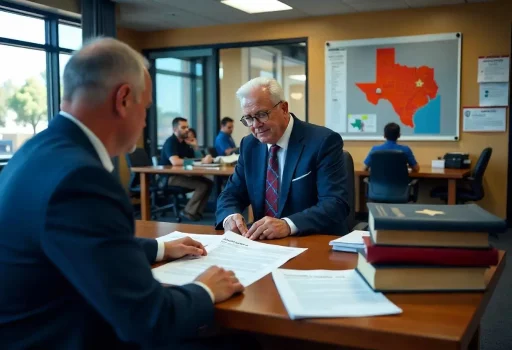

Get State Approval Texas

Texas State Approval for Colleges and Career Schools

Navigating the complexities of higher education approval in Texas requires careful planning and execution. Suppose you are considering launching a new institution, expanding academic offerings, or ensuring compliance with THECB regulations. In that case, it is essential to understand the required steps for institutional authorization and program approval. Overlooking any part of this process can result in costly delays.

This guide details what you need to know about authorization, academic program approval, and ongoing compliance in Texas.


THECB’s Role in Higher Education Regulation

THECB’s Role in Higher Education Regulation

The Texas Higher Education Coordinating Board is the state agency that regulates all degree-granting institutions operating in Texas. This regulation encompasses private institutions, out-of-state schools that establish a presence in Texas, and public colleges or universities intending to add new academic programs. Compliance with THECB rules is mandatory before any instruction can commence or degrees can be offered.

Authorization and Program Approval

Authorization and Program Approval

Texas uses a two-track system for institutional approval based on accreditation status.

Certificate of Authorization This certificate is required for institutions that are already accredited by a THECB-recognized accrediting body. It acknowledges the institution’s status and grants permission to operate legally in Texas. Accredited institutions, including out-of-state schools opening locations in Texas, generally follow this process.

Certificate of Authority Institutions without current accreditation must apply for a Certificate of Authority. This is a temporary form of approval that allows them to operate while they work toward accreditation. The process includes stricter oversight and requires regular renewal until accreditation is achieved.

Application Requirements Applicants must provide detailed documentation covering a range of areas. This includes proof of business status and governance structure, a description of academic programs, faculty qualifications, and resources to support instruction. Institutions must also submit financial statements and provide a surety bond to protect students in case of closure. If the institution is unaccredited, it must show a clear path toward accreditation, including a proposed timeline and milestones.

Institutions offering professional degrees or programs requiring external approval must also show compliance with other licensing boards. Nursing, law, and other regulated programs must meet additional requirements beyond those of THECB.

After submission, THECB reviews all application materials and may request additional information. For unaccredited institutions, a site visit is often required. The Certification Advisory Committee then evaluates the institution’s readiness and provides recommendations to THECB leadership for final approval.

Program Approval Process

Once an institution is authorized, any new degree or certificate program must also be approved. Program development starts internally with curriculum design, faculty assignment, and a needs assessment to show labor market demand and avoid duplicating existing programs. Institutions must demonstrate financial and academic capacity to offer the proposed program.

Applications are submitted to THECB with supporting documentation including program descriptions, delivery methods, faculty lists, enrollment projections, and funding plans. Programs must also align with Texas Education Code standards and meet academic quality expectations.

THECB staff will review the proposal and may seek peer input from other academic professionals. If it meets all criteria, the proposal may be approved administratively or submitted to the full Board. In some cases, other institutions may be allowed to comment if they believe a proposed program unnecessarily duplicates existing offerings.

Once approved, the program is added to the institution’s inventory and may be offered to students.

Program Approval Process

Who approves a new college or trade school in Texas?

In Texas, a private college that grants degrees needs a certificate of authority or a certificate of authorization from the Texas Higher Education Coordinating Board (THECB), while a career school needs a certificate of approval from the Texas Workforce Commission (TWC).
AEC doesn't issue Texas approval and can't promise one. THECB or TWC decides.

AEC's founder, Dr. Ramin Golbaghi, went through these approvals as a school owner. He founded and led a private postsecondary school, he personally obtained state approval to operate, ACCSC institutional accreditation, Title IV certification, VA education benefits approval, WIOA/I-TRAIN workforce eligibility and SEVP certification.

 
Compliance and Reporting Obligations

Compliance and Reporting Obligations

Authorization is just the beginning. Institutions must remain in good standing through ongoing compliance. This includes maintaining accreditation, filing annual renewals, and submitting Coordinating Board Management (CBM) reports detailing enrollment, course delivery, and degrees awarded. Institutions must notify THECB before making major changes to leadership, ownership, program scope, or campus locations.

Financial safeguards must remain in place, including surety bonds and refund policies. Institutions are also required to maintain transparency in admissions, marketing, and student support. If issues arise, THECB has the authority to enhance oversight or recommend the closure of non-compliant programs.

How Accreditation Expert Consulting can help?

Many institutions underestimate the effort involved in gaining and maintaining approval. Missteps during the process can delay launch dates, reduce student confidence, and attract unwanted attention from regulators. 

Our team helps new institutions assess readiness, gather required documentation, and understand Texas-specific rules and expectations. We assist with proposal development, site visit preparation, and policy documentation. We also support ongoing compliance through reporting tools, deadline tracking, and internal audits.

If your institution is expanding or introducing new programs, we can help with curriculum planning, market analysis, and coordination with both THECB and accrediting bodies. Our consultants are familiar with the nuances of Texas regulations and can assist you in resolving concerns efficiently.

Accreditation Expert Consulting supports your institution’s full journey through Texas higher education approval from concept to compliance. Contact us to learn how we can guide you through this critical process and help you avoid unnecessary delays.

Let’s Get Started

Reach out today to begin planning your next step in Texas higher education.

Free Consultation
contact-us