By Dr. Ramin Golbaghi · Updated October 2026
NSLDS distance education reporting is a Title IV compliance reporting duty added by the U.S. Department of Education’s final rule of January 3, 2025. Schools in the federal student aid programs under Title IV of the Higher Education Act must report student-level enrollment in distance education or correspondence courses for every Title IV aid recipient, through the National Student Loan Data System (NSLDS).
The Department has said it will not require the report before July 1, 2027.
This guide is for registrars, financial aid directors, compliance officers and student information system staff at schools with online courses. Dr. Ramin Golbaghi, who wrote it, founded and led a private postsecondary institution and personally obtained its Title IV certification.
Each Title IV recipient is expected to get one status (distance education, hybrid or in-person), sent with the enrollment reporting schools already file in NSLDS. A course counts as a distance education course only when all of its required instruction is delivered at a distance; in-person orientation, testing or academic support is allowed.
What NSLDS Distance Education Reporting Requires
The regulation is one sentence: for each Title IV recipient, the school reports “the recipient’s enrollment in distance education or correspondence courses,” following procedures the Secretary of Education sets. The rest comes from the Department’s explanation in the final rule.
- It is a student-level report. The Department “will not be collecting data at the course level,” and it covers every student the school already reports for enrollment.
- There are three statuses: distance education, in-person and hybrid. The Department said it does not plan a fourth.
- It is expected to travel with NSLDS enrollment reporting, through an existing data stream with no new portal.
- Frequency is open. The Department intends to align it with existing reporting, such as the 60-day interval schools already follow for NSLDS, where a roster file must be answered within 15 days.
- Correspondence courses are expected to be reported apart from distance education.
Why the Department Wants the Data
The final rule ties these provisions to the Department’s oversight of distance education and correspondence programs; the Integrated Postsecondary Education Data System (IPEDS) has no student-level data for that. The report also helps the Department check whether a school may have reached the 50 percent threshold: at least half of its students, half of its courses or half of one program offered at a distance in an award year. A school at that level needs a one-time further approval from its institutional accreditor.
Keep the threshold count apart from the NSLDS status. The Department’s 2023 guidance counts a student with at least one distance education course as enrolled in distance education for the threshold; in the NSLDS report, the same student with three classroom courses is likely hybrid.
When Distance Education Reporting Starts: July 1, 2027
- January 3, 2025: the final rule is published.
- July 1, 2026: the definition of a distance education course takes effect, with the rule’s changes to the Return of Title IV Funds (R2T4).
- July 1, 2027: the earliest date the Department said it would require the report, a year later than first proposed.
- Before then: a separate information collection, published for full public comment closer to implementation.
As of October 14, 2026, no reporting instructions had been published, and the July 2026 NSLDS Enrollment Reporting Guide has no field for modality.
Treat July 1, 2027 as the earliest start, not a fixed go-live. The definition is final and the file format is not, so code courses now and build the export later.
Distance Education Under the Final Rule
The Federal Definition of a Distance Education Course
“Distance education course: A course in which instruction takes place exclusively as described in the definition of distance education in this section notwithstanding in-person non-instructional requirements, including orientation, testing, and academic support services.”
Distance education itself means instruction through the internet or similar technology to students separated from the instructor, with regular and substantive interaction between them. The new definition decides when a whole course counts. The test is whether any instruction the course requires happens in person; an orientation, a proctored exam or a tutoring session is not instruction for this purpose.
Hybrid Courses, Clinical Rotations and Labs
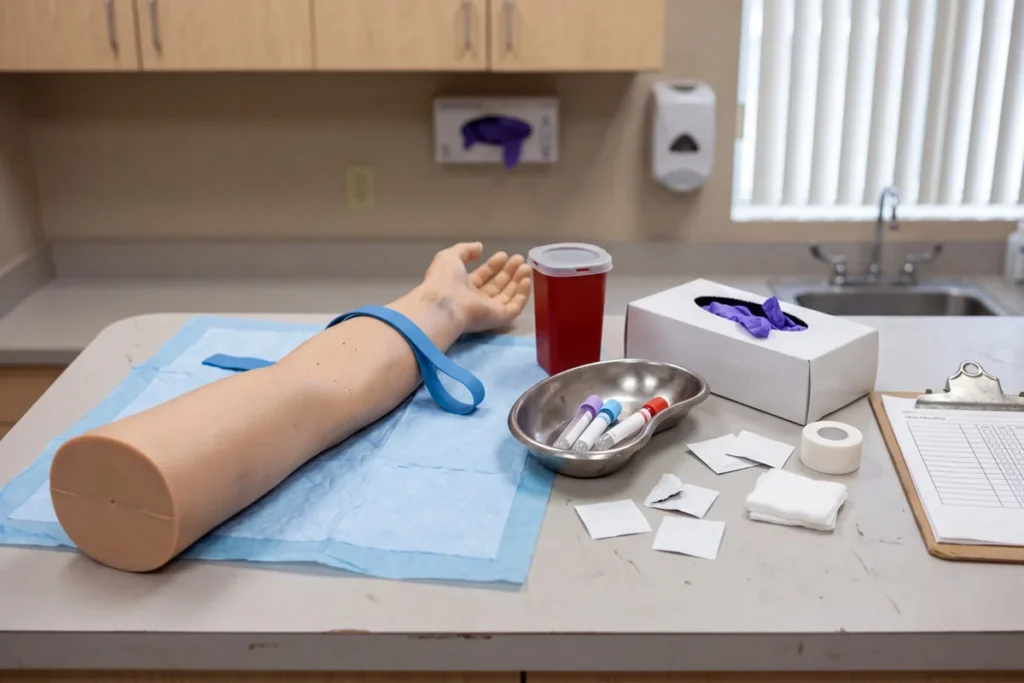
Hybrid courses with any in-person instruction, “no matter how small,” are not distance education courses, the Department wrote. One required lab session on campus is enough.
Clinical rotations follow the same logic. In the Department’s example, the course with the hands-on part of a medical rotation is not a distance education course, and an online biology course in the same term is. The final rule also dropped “residency experiences” from the proposed definition, in part to match IPEDS.
What the Final Rule Did Not Adopt
- Attendance taking in online courses. The proposal to require it was not finalized, because engagement-tracking tools need more development; the Department may revisit it.
- A ban on asynchronous clock hours. It was dropped, and the 2020 conditions stay, including regular and substantive interaction and no eligibility for time “more comparable to homework, such as reading or watching videos.”
- Virtual locations. The proposed “virtual location” for fully online programs was dropped in favor of the NSLDS report.
Logging In Is Not Attendance
The Federal Student Aid Handbook is direct: documenting that a student logged into an online class “is not sufficient to demonstrate academic attendance.” Accepted evidence includes a submitted assignment or exam, documented participation in an interactive tutorial or webinar, a post in an online study group the school assigned or in an academic discussion forum, and a question the student sent an instructor about the course.
Monitoring logins alone does not make a school one that is required to take attendance; tracking academic engagement does, when it is used to monitor synchronous classes, withdraw students administratively or enforce an attendance policy. Where a school uses a last date of academic attendance, these records set the withdrawal date. The same final rule changed how a return of aid is calculated; our guide to the R2T4 final rule changes covers it.
Distance Education, Hybrid or In-Person: How a Student Is Reported
Classification starts with each course and ends with one status per student. The second column applies the definition and marks the one case it leaves open; the third gives the likely status, since the reporting codes are not published.
| Student’s Courses in One Term | Distance Education Course? | Likely Status in the Report | Basis |
|---|---|---|---|
| Four fully online courses, plus an orientation and one proctored exam on campus | Yes, all four | Distance education | Orientation and testing are non-instructional |
| Four courses that meet in a classroom | No | In-person | No distance education course |
| Three fully online courses and one lab that meets on campus each week | Online courses yes; the lab no | Hybrid | A mix of the two |
| One course the student may attend in the room or remotely, as the student chooses, plus classroom courses | Not settled: instruction happens in the room, yet no in-person part is required | Hybrid | The Department’s own example of hybrid status |
| An online didactic course and a clinical rotation taught hands-on by a preceptor | Didactic course yes; rotation no | Hybrid | The Department’s clinical example (course test); status inferred from the three statuses |
| Only one course that term, mostly online, with two required skills sessions on campus | No, however short the sessions | Not settled: in-person or hybrid | Wait for the reporting instructions |
| Fully online in the fall, fully in person in the spring | Fall yes; spring no | Distance education in the fall, in-person in the spring | The Department’s own example |
| Mailed or posted materials and exams, with limited contact the student starts | No; a correspondence course is not distance education | Correspondence, which the Department expects to report apart from distance education | Correspondence course definition |
Designing a Course That Mixes Online and Campus Work? Book an introductory meeting with Accreditation Expert Consulting (AEC), call +1 (833) 232-1400 or write to info@accreditationxpert.com.
Book an Introductory Meeting Call +1 (833) 232-1400
What to Build Before July 2027
The report itself will likely be one more value in a file schools already send. The work is in coding sections and rolling them up to a student status.
- Read every course section against the definition (registrar and academic leads): does any required instruction happen in person? Labels such as online or HyFlex can stay; record the federal answer beside them and train the staff who build schedules to apply it.
- Store the answer in the student information system before registration opens (registrar and IT): a required field, a check that blocks publishing a section without it, and a log whenever a section’s code changes after the term starts. With no published codes, use internal values you can map later, for example:
- DE: instruction only at a distance, with regular and substantive interaction with a qualified instructor and no in-room option (an in-person orientation, exam or tutoring visit is allowed)
- IP: taught in person, with no instruction at a distance
- MX (mixed): online instruction plus required in-person instruction, such as a lab or skills session (not a distance education course)
- RO (remote option): the student may attend in the room or remotely, by choice; a course with a remote option and a required in-person part is also coded RO
- CORR: materials and exams sent to the student, with limited contact that the student mostly starts (a correspondence course)
- Write the roll-up rule (registrar, financial aid and IT), with the branches in this order:
- CORR courses stay out of the status and are reported separately; the Department has not said what status a student with only CORR courses gets.
- Only DE courses: distance education.
- Only IP courses: in-person.
- Any RO course, or DE courses mixed with other codes: hybrid, until the Department publishes its codes.
- MX courses with no DE or RO course: a review queue, since the Department has not said how to report that student.
- Run the rule on last year’s terms (IT and compliance), twice, and compare. Count Title IV recipients in each status. Separately, check the school and each program against the 50 percent threshold, using the Department’s count described above, which covers all students.
- Connect it to whoever sends enrollment to NSLDS (registrar or financial aid). If a third-party servicer submits for you, ask now how it will carry the new status.
- Keep academic engagement records for every online course, not logins (financial aid and faculty).
- Watch the Federal Register and FSA Partner Connect for the information collection and reporting instructions (compliance), and comment if the proposed values don’t fit your programs.
Example: One Student Through One Term

Assume your school sends enrollment to NSLDS every two weeks, more often than the 60-day minimum, and the rule takes the status on each of those dates. A Title IV recipient starts the fall term in two courses coded DE and one lab coded IP, so the first report shows hybrid. In week three the student drops the lab, and the next report shows distance education. In week six the student adds a late-start seminar that students may join in the room or by video link (RO), and the following report shows hybrid again.
Readiness Check: Five Questions
A no on any of these is the next piece of work.
- Does every section on next term’s schedule carry a delivery code?
- Can the student information system list last spring’s Title IV recipients with one status each for a chosen reporting date, with no edits by hand?
- Does a second run of last spring give the same result?
- Has the person or servicer who submits enrollment to NSLDS seen the roll-up rule?
- Can you show academic engagement records, not logins, for each online course?
Courses that move online also need regular and substantive interaction designed into them. If you’re rebuilding courses for that standard, see how our curriculum development work runs.
NSLDS Distance Education Reporting: Frequently Asked Questions
When Does NSLDS Distance Education Reporting Start?
July Not before July 1, 2027, a year later than first proposed. The Department will set the reporting procedures before the first report; as of October 14, 2026 they had not been published.1, 2027.
What Is the Difference Between Distance Education and Online Education?
Online education is a description; distance education is a defined federal term. An online course with regular and substantive interaction with a qualified instructor is distance education; one with limited contact that the student mostly starts is a correspondence course, a separate federal category.
Do Schools Have to Take Attendance in Online Courses?
Not under the final rule. A school may still have to take attendance because its accreditor, its state or its own policy requires it, and a login alone never shows academic attendance.
Planning to Move More Courses Online?
If the move takes your school or a program to the 50 percent threshold, your institutional accreditor must approve the change, unless a full accreditation review already covered your distance education. AEC helps schools with accreditation compliance and curriculum development; book an introductory meeting to talk through your plans.
Prefer to Listen? The Podcast Episode on This Topic
Episode 18 of Accreditation and Beyond, AEC’s podcast (14 minutes), covers section coding, a repeatable roll-up and checks before submission. Published in March 2026, before the definition took effect.
About the Author
Dr. Ramin Golbaghi is the Founder and CEO of Accreditation Expert Consulting. He founded and led a private postsecondary institution and, as its owner, personally obtained six approvals: BPPE approval to operate, ACCSC institutional accreditation, Title IV certification, VA education benefits approval, WIOA/I-TRAIN workforce eligibility, and SEVP certification.