What Happens After You Submit Your Application?
Submission is not the finish line. It is the point where external review becomes more focused, requiring a rigorous post-submission review in higher education institutions. In this episode of Accreditation & Beyond, Ramin and Sam explain what usually happens after an institution files for state approval, accreditation, or a government-related review in the United States.
For founders, presidents, compliance officers, academic leaders, and operations teams, this phase matters immensely. A solid application can still slow down significantly after filing if the institution is not thoroughly prepared for:
- Completeness screening and intake assessments
- Detailed follow-up questions and requests for clarification
- Comprehensive document comparison
- Intensive peer and reviewer interviews
Why Post-Submission is a Responsiveness Period (Not a Waiting Period)
One of the biggest misunderstandings in educational administration is treating the period after filing as a passive waiting period. In reality, it is a critical responsiveness period.
Before moving into a deeper qualitative review, an evaluator or analyst will first test whether the file is complete, current, and internally consistent. If your catalog, website, student-facing policies, financials, program details, and supporting attachments do not perfectly line up, the institution can fall into a prolonged clarification cycle quickly.
Even small mismatches around program length, delivery model, tuition, calendar language, or public claims can signal weak institutional control to reviewing bodies like the U.S. Department of Education. That is why many institutions benefit from a formal post-submission review strategy long before the first official follow-up request arrives.
Navigating the Post-Submission Review Sequence in the U.S.
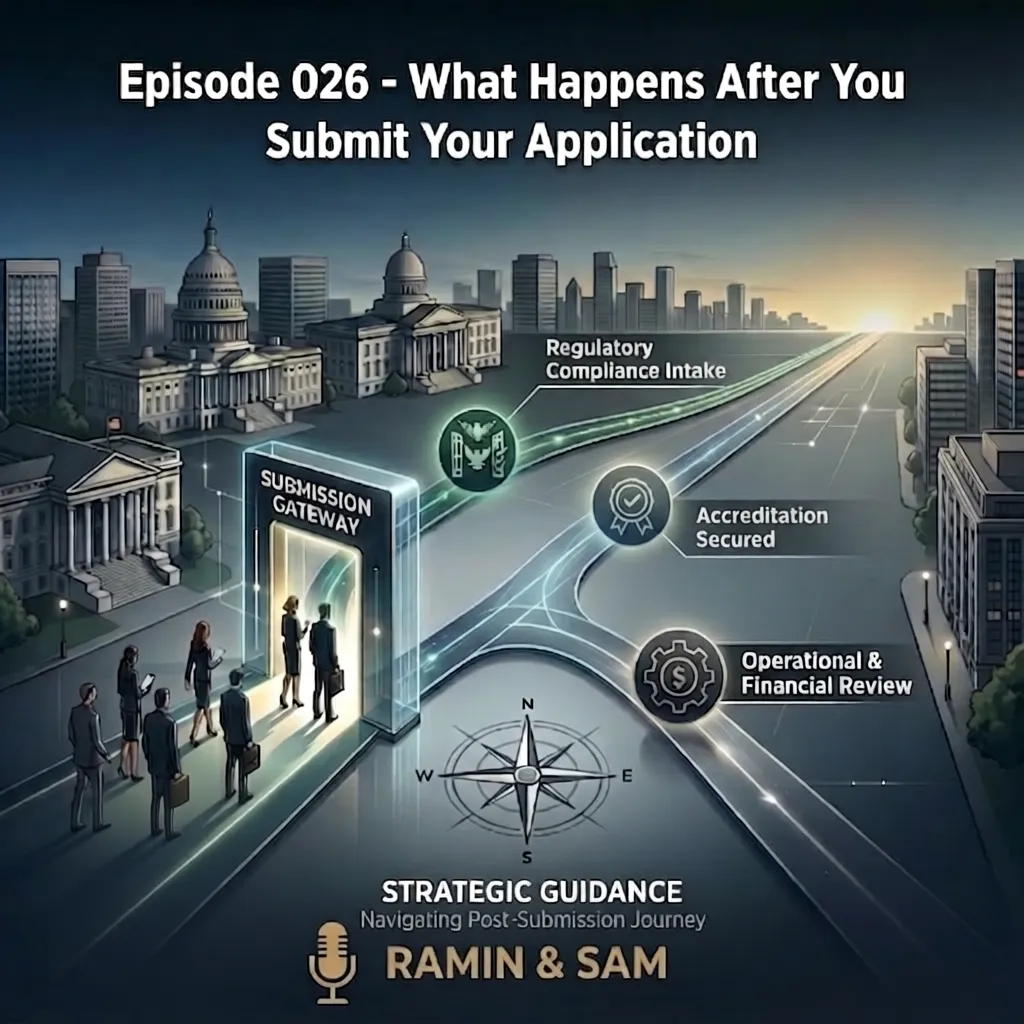
In the United States, the post-submission review process does not follow one universal sequence. The path varies significantly by state agency, institutional accreditor, program type, funding relationship, and delivery model.
- State Approval Bodies: Typically begin with strict intake and completeness questions regarding state licensure compliance.
- Accrediting Agencies: Move much more deeply into evidence, student learning outcomes, implementation, and systemic alignment with established accreditation standards.
- Government-Related Agencies: Focus heavily on operational reliability, reporting capacity, consumer disclosures, or administrative fiscal controls.
Because formal requirements come from the specific reviewing body, best practice dictating institutional success is clear: assign response ownership early, control document versions, keep public language aligned with what is under review, and prepare the people responsible for academics, student services, operations, finance, and compliance to answer consistently if the process becomes more interactive.
Maintaining Consistency Against Official Accreditor Standards
For that reason, institutional leaders should carefully compare pending submissions against the applicable accreditor standards, state approval procedures, or official agency review instructions before answering follow-up questions or making public-facing changes.
An official source matters because reviewers often test whether the institution is still describing the exact same program, scope, modality, and operating model that were originally submitted.
This verification becomes especially critical when the institution is expanding online, revising website language, adjusting tuition or schedules, opening an additional location, or moving into a funding or agency review process that depends on other higher education approvals already being in place.
Building a Resilient Post-Submission Review Strategy
The practical takeaway from Accreditation & Beyond is that institutions should measure readiness not only by whether they can submit, but by whether they can successfully withstand review after submission. Strong educational leaders set up strict version control, track exactly who owns each response, keep the master file clean, and make sure follow-up answers are direct, coordinated, and evidence-based.
Accreditation Expert Consulting (AEC) helps institutions strengthen that critical stage of the process by pressure-testing documentation, aligning public and internal records, and preparing leadership for the review period that starts after filing.
Avoid Preventable Approval Delays
If your institution is preparing to submit, already in review, or trying to avoid preventable delays after filing, protect your timeline today before a manageable review turns into a prolonged clarification cycle.
Schedule a Post-Submission Review Strategy Consultation
Need help getting started right away? Reach out to our team at info@AccreditationXpert.com or call us directly at 1-833-232-1400 (that’s X-P-E-R-T). We are here to support your next step with clarity and confidence.