In this episode, Ramin and Sam take listeners inside the CAAHEP accreditation process, a critical milestone for health and allied health programs aiming to boost legitimacy, outcomes, and employer trust. With increased pressure on colleges to demonstrate measurable student outcomes, meet site visit expectations, and compete amid higher education enrollment decline , this discussion outlines the steps schools must take to prepare in 2026. Whether you’re launching a diagnostic medical sonography program or strengthening an existing surgical tech track, this episode walks you through what matters and what to avoid.
What Is CAAHEP and Why It Matter
Ramin opens with an overview of what CAAHEP (Commission on Accreditation of Allied Health Education Programs) actually does, and why its role is unique in the landscape of programmatic accreditation. Sam breaks down how CAAHEP doesn’t accredit institutions as a whole but evaluates individual health-related programs. They explain how CAAHEP approval signals employer-ready graduates, increases program competitiveness, and in many cases, is a requirement for licensure or certification eligibility.
Is CAAHEP Accreditation Mandatory?
Not every allied health program legally requires CAAHEP accreditation, but for many (like Diagnostic Medical Sonography, Surgical Technology, or Anesthesia Technology), it’s effectively essential. Sam explains how state regulations, employer hiring practices, and certification boards often make CAAHEP status the determining factor for job placement and licensure eligibility. Skipping accreditation could mean graduates aren’t eligible to sit for exams or apply for jobs in their field, which could impact enrollment and retention.
When Programs Become Eligible to Apply
Programs can’t apply for CAAHEP accreditation on day one. Ramin outlines the eligibility timeline, which includes having a graduated cohort, adequate clinical case numbers, functioning program advisory committees, and state approval in good standing. The duo discusses the importance of having data from actual student outcomes, so site reviewers can assess what the program delivers in the real world.
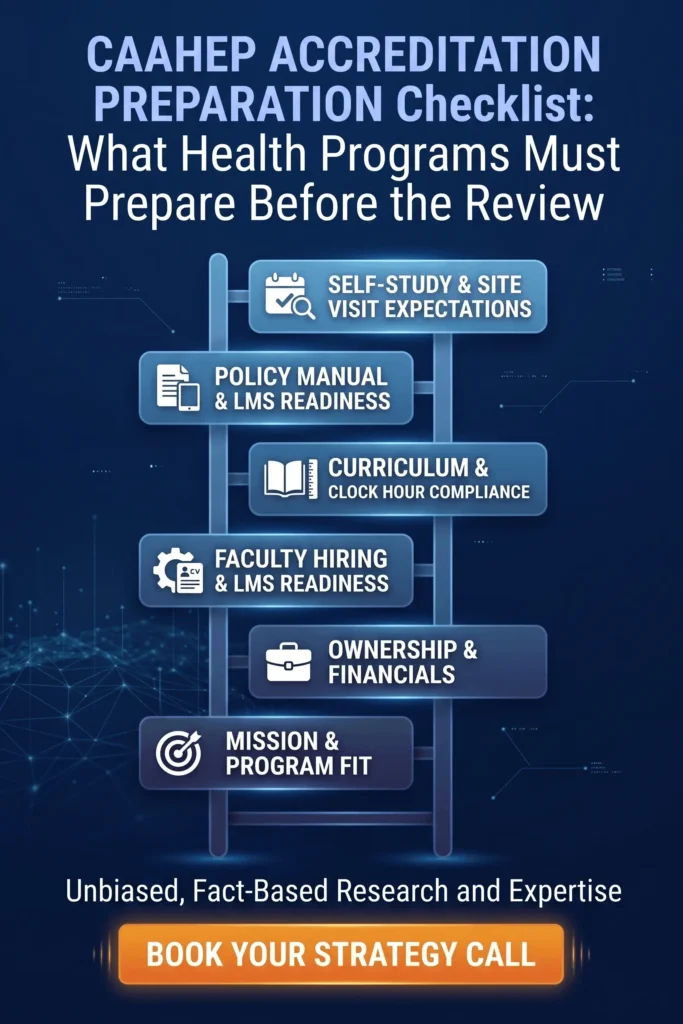
Self-Study & Site Visit Expectations
One of the most labor-intensive phases is the self-study report, which must align with CAAHEP’s detailed Standards and Guidelines. Sam describes how the site visit team will review policies, student records, faculty qualifications, clinical partnerships, and even sit in on classes or lab sessions. They stress that this is more than a checklist; reviewers look for alignment between what the school promises and what it delivers.
Measuring Outcomes and Graduate Success
CAAHEP’s required outcomes aren’t suggestions—they are monitored annually. Ramin and Sam explain the key metrics: graduation rates, credentialing exam pass rates, andjob placement rates. Programs must also prove that they collect and analyze data for continuous improvement, not just for compliance. The hosts give examples of how poor tracking or inaccurate reporting can trigger warnings, citations, or accreditation delays.
Common Mistakes That Delay Approval
From skipping committee meetings to using outdated syllabi, the hosts walk through preventable errors that hurt program credibility during the review. Sam points out how programs that rush into the process before they’re ready often get bounced back with costly revision demands. Ramin emphasizes the importance of mock site visits and internal audits before submission.
How AEC Supports CAAHEP Applicants
Accreditation Expert Consulting offers hands-on services to help institutions with everything from self-study drafting, clinical documentation templates, and advisory board setup to site visit coaching. Ramin and Sam close this segment with a reminder: preparing for CAAHEP isn’t just about meeting minimums, it’s about positioning the program for long-term success.
AEC Note
CAAHEP accreditation is one of the most respected benchmarks for allied health programs, and also one of the most rigorous. If you’re a school owner or program director planning for accreditation in 2026, the time to prepare is now. From graduate tracking systems to faculty readiness, every detail matters.
Need help getting started? Listen to the full episode, share it with your academic team, and reach out to us at info@AccreditationXpert.com or call 1-833-232-1400 (that’s X-P-E-R-T). Our team is here to support your next step with clarity and confidence.