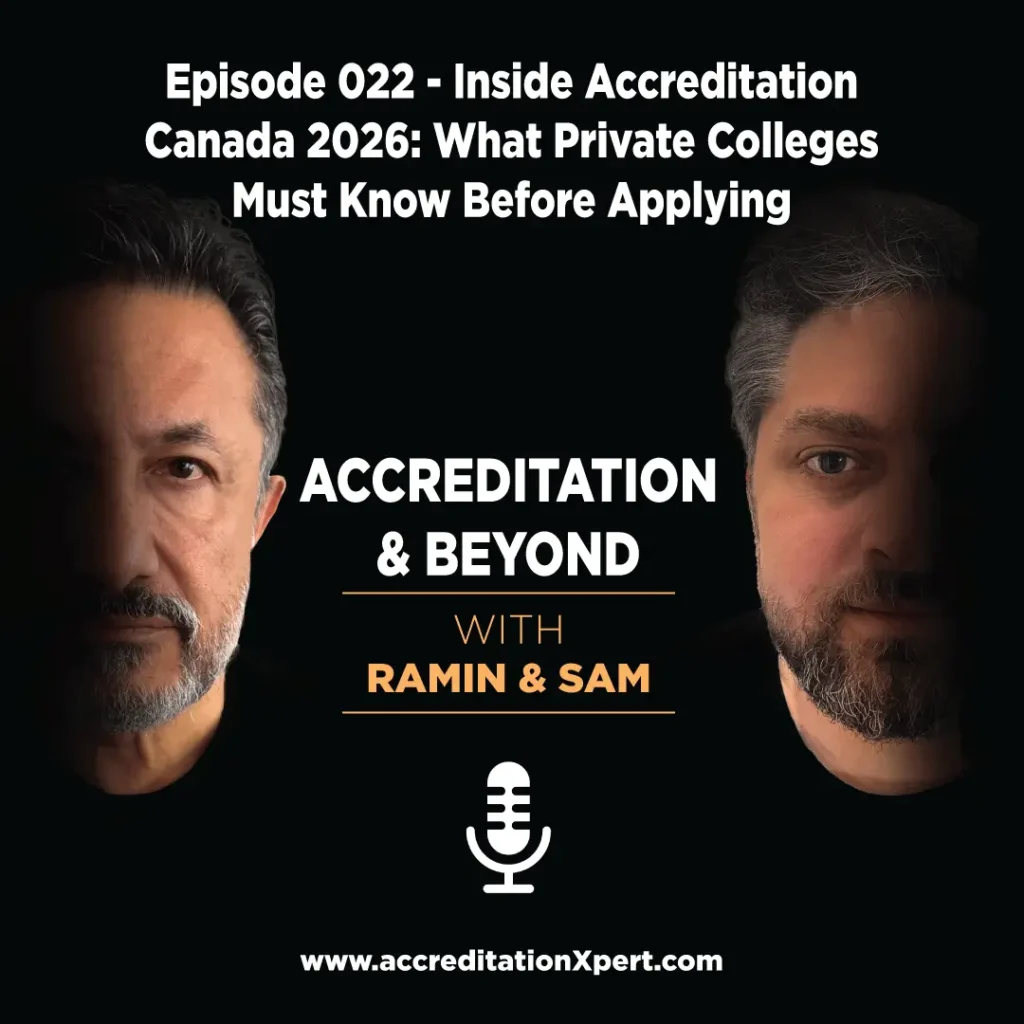
Hosted by Dr. Ramin Golbaghi (CEO) & Sam Askari (COO)
Produced by Accreditation Expert Consulting
Private colleges across Canada are exploring accreditation as a way to improve credibility, enhance student engagement, and meet evolving provincial requirements. In this episode, Dr. Ramin Golbaghi and Sam Askari unpack the full process of earning accreditation through Accreditation Canada in 2026. From eligibility to self-assessment to stakeholder involvement, this conversation delivers practical, strategic advice for any institution preparing to enter the process. Whether you’re responding to higher education enrollment decline or aligning your accreditation strategy with long-term growth, this episode offers a detailed roadmap.
Eligibility and Readiness in 2026
Ramin and Sam kick off the episode by clarifying which institutions can pursue Accreditation Canada and what minimum standards they must meet. This includes being a legally registered private college, offering career-focused programming, and having an operating history and student data to show. They emphasize that readiness is not just about documentation; it’s about having embedded quality assurance systems before starting.
Stages of Accreditation Canada’s Process
The conversation moves into the 3-stage process used by Accreditation Canada. Stage 1 involves initial documentation and self-assessment; Stage 2 brings a detailed standards-based review; and Stage 3 includes an on-site survey and external evaluation. Sam explains how long each step typically takes and the kinds of follow-up that might be required.
Stakeholder Involvement and Governance Requirements
One of the areas that set Canadian accreditation apart is its emphasis on stakeholder input. Colleges must show how students, faculty, community partners, and employers are involved in program development, quality reviews, and institutional decision-making. Sam and Ramin offer examples of how this is documented and how it ties to governance expectations.
Evidence-Based Practices and Outcome Tracking
In 2026, outcome tracking is front and center. Colleges must use defined indicators, like graduation rates, employment outcomes, and student satisfaction- to demonstrate ongoing effectiveness. The hosts explain what Accreditation Canada looks for in evidence, and how colleges can prepare audits or reports that stand up to scrutiny.
Compliance Gaps We’re Seeing in 2026
Sam outlines some of the most common reasons institutions are held up during the process. These include outdated policies, a lack of documented improvement plans, and insufficient training on performance standards. Ramin adds that many schools underestimate how detailed the evaluation gets, especially during site visits.
Comparing U.S. and Canadian Accreditation
This section offers a practical comparison for listeners familiar with U.S. regional or national accreditors. While U.S. systems are private and more diverse, Canada’s approach is more centralized and often directly tied to provincial regulation. The differences in self-assessment, financial oversight, and stakeholder expectations are broken down clearly for institutional leaders planning cross-border strategy.
Tips for First-Time Applicants
To close, Ramin and Sam offer hands-on advice for colleges applying to Accreditation Canada for the first time. From ensuring your self-assessment is aligned to published standards, to preparing internal teams for the external review process, this section delivers actionable tips that schools can apply immediately.
Final Thoughts
Accreditation Canada offers private colleges a clear pathway to institutional credibility, but the process in 2026 is more detailed, stakeholder-driven, and outcome-focused than ever before. If your college is preparing to apply, or even just exploring the possibility, this episode gives you the roadmap to do it right.
To get personalized support for your school’s accreditation strategy, email info@AccreditationXpert.com or call 1-833-232-1400 (spelled X-P-E-R-T). And if this episode helped clarify your next steps, please share it with a colleague and subscribe to Accreditation & Beyond.