Securing national accreditation from the Accrediting Commission of Career Schools and Colleges (ACCSC) is one of the most critical milestones for any career education institution. It is the ultimate gateway to long-term credibility and Title IV federal funding access.
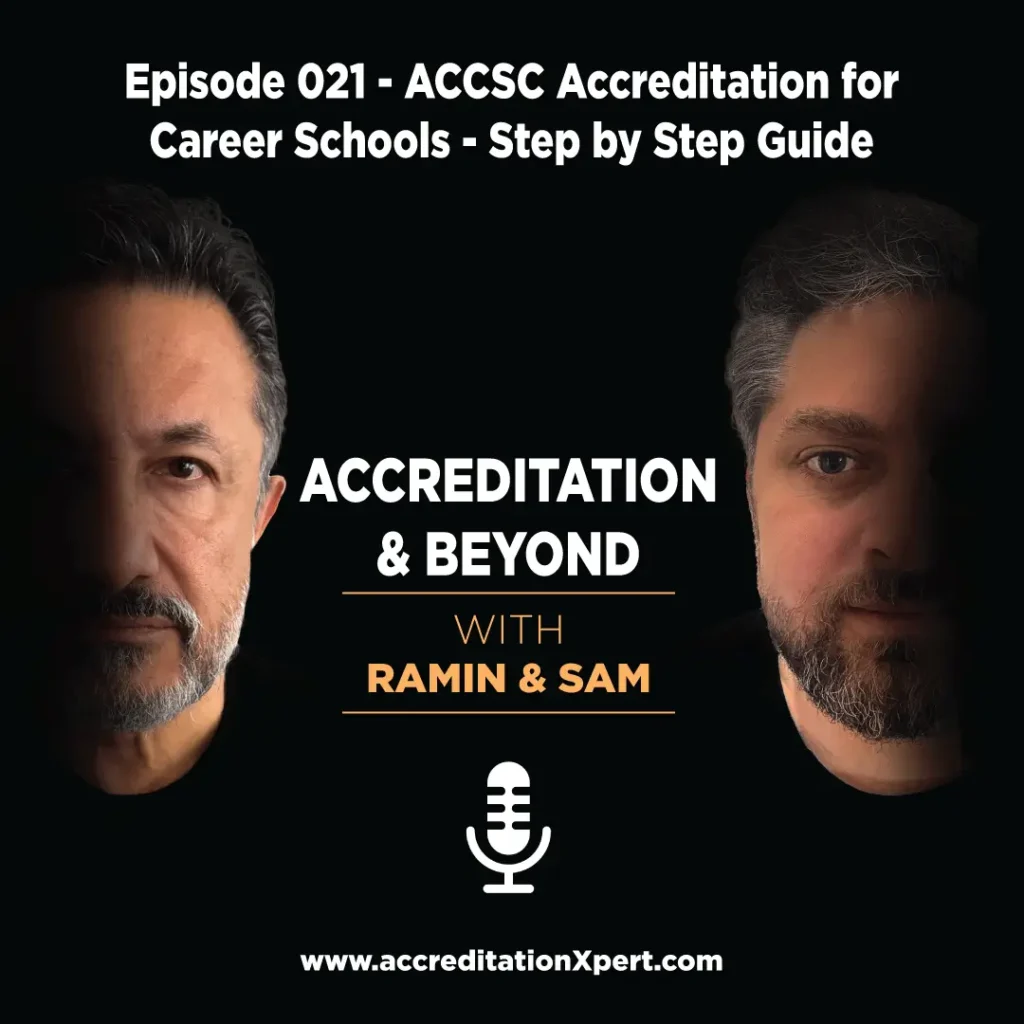
However, achieving this in 2026 isn’t just about reading the rulebook. In this episode of Accreditation and Beyond, AEC’s CEO, Ramin, and COO, Sam, sit down to expose the real-world blind spots that catch school leaders off guard.
From strict state approval prerequisites to the newly enforced July 2025 standards, we break down exactly what you need to know to avoid a denied application.
The Golden Rule from This Episode:
“If your school is still in a probationary or temporary status with the state, your eligibility is at risk. The state approval must be solid. Period.” — Sam, COO at AEC
Are You Truly Eligible to Apply? (The Pre-Application Trap)
Many first-time applicants make the costly mistake of rushing the process. ACCSC requires a proven track record before they even look at your initial paperwork. According to our hands-on experience guiding multiple institutions through this maze, you must cross two major hurdles first:
- The Two-Year Rule: Your institution must have at least two years of continuous operation with active students and measurable student achievement data.
- Rock-Solid State Authorization: ACCSC will not process your application if your state licensing agency has you on a temporary or probationary status. Your foundation at the state level must be flawless before aiming for national recognition.
Can Your Team Survive the Strict SER Deadlines?
Once you pass the initial eligibility bar, your institution enters a phase where time management dictates your success.
After submitting your Pre-Workshop Application (a vital screening tool) and attending the required Initial Accreditation Workshop, the clock starts ticking.
Within just six months of that workshop, you are legally bound to submit Part 1 of the Self-Evaluation Report (SER). Shortly after, Part 2 is due.
What happens if you miss these deadlines? You lose your progress and have to start the entire grueling process over. Furthermore, expect an Orientation Evaluation Visit in between Part 1 and Part 2. This is ACCSC’s pre-site checkup to ensure your real-world policies actually match the promises in your school catalog.
Where Are Schools Getting Penalized Most in 2026?
The ACCSC Standards of Accreditation received a major update effective July 1, 2025. While management, financial reporting, and distance education outcomes are heavily scrutinized, student recruitment is where we see the most enforcement actions.
The commission has zero tolerance for misleading admissions tactics. To stay compliant:
- Every admissions representative must sign and strictly adhere to the ACCSC Code of Conduct.
- All disclosures regarding your approval status, tuition costs, and Gainful Employment Data must be 100% accurate and publicly available in your catalog.
Failure to maintain compliance here doesn’t just result in a warning; the commission holds the authority to defer approval, impose strict conditions, or deny your application outright.
What Happens After You Get Accredited?
Getting the approval letter isn’t the finish line; it’s the beginning of a heavily monitored relationship.
Once accredited, your work shifts to maintenance and transparency:
- College 360 Reporting: You are required to submit an Annual Report detailing student outcomes, site location updates, and leadership changes.
- Continuous Monitoring: ACCSC keeps a close watch on student complaints, default rates, and even the language used on your website’s marketing materials.
- Substantive Change Applications: If you change your ownership, program structure, or even adjust tuition drastically, you cannot simply update your website. You must file formal applications for these substantive changes.
Need Expert Guidance for Your Accreditation Journey?
ACCSC accreditation is a multi-year commitment, and navigating the appeals process (handled by a 10-person independent panel) can be an absolute nightmare if you make early missteps.
You don’t have to navigate these strict regulations alone. From initial eligibility screening to intensive SER reviews, the Accreditation Expert Consulting (AEC) team is here to protect your institution’s future.
🎧 Listen to the full episode above to hear Ramin and Sam dive deeper into these requirements.
Have a specific topic you want us to cover on the next podcast, or need a compliance audit for your school?
Email us directly at info@accreditationexpert.com or get in touch through our Contact Us page to schedule a consultation.